
2026-09-21 · Miguel Soto
How Hail Storms Affect Roofs in North Texas
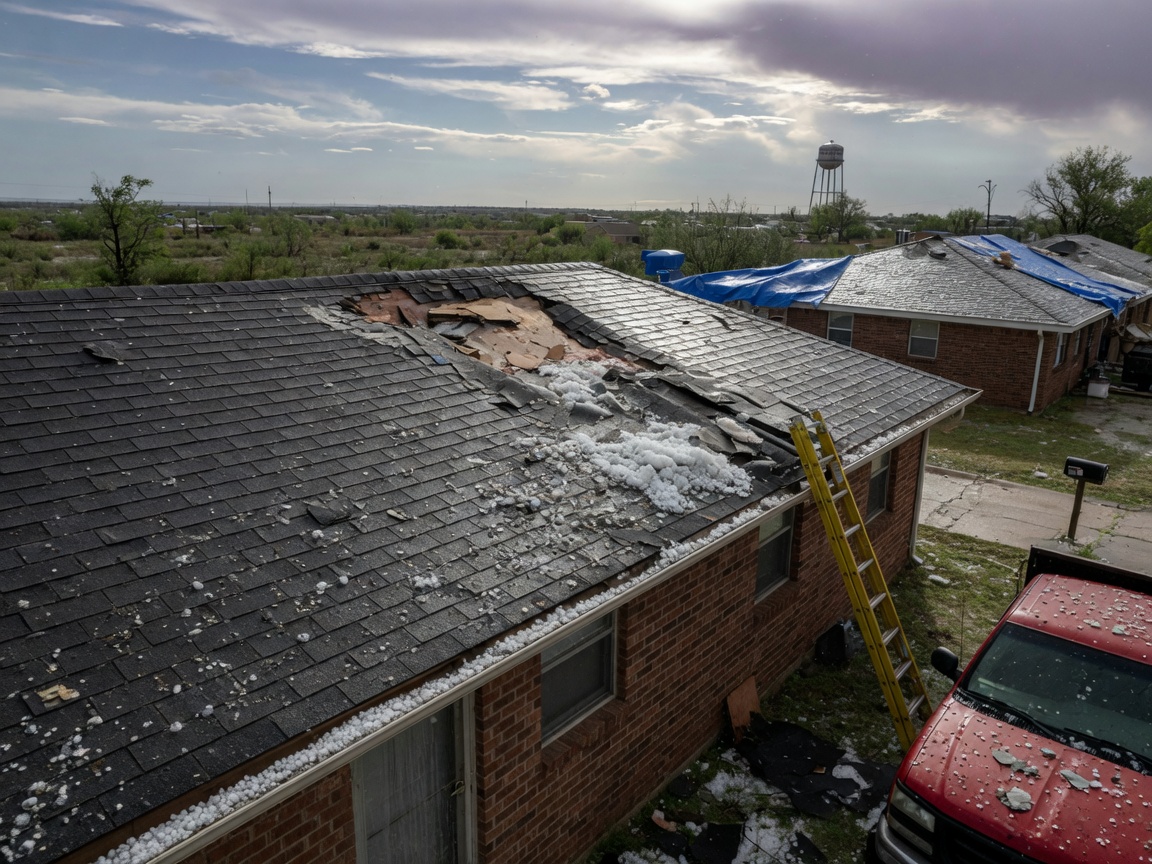
Hail storms in North Texas can dent, crack, and dislodge granules from asphalt shingles while leaving visible bruises or punctures on metal panels, frequently forcing repairs or full replacement within 5–10 years of the event when impacts exceed 1 inch in diameter.
How Hail Damages Asphalt Shingles
Alvarado sits in Johnson County where spring and summer storms roll through from the west, dropping hail that strikes the most common 3-tab and architectural shingles on homes built from the 1970s onward. Granule loss exposes the asphalt mat to UV rays, accelerating cracking along the edges and allowing water to seep under the tabs during the next rainfall. In neighborhoods near Downtown Alvarado and along FM 2738, older roofs already weathered by hot summers lose another 3–5 years of expected life after one moderate hail event. Homeowners in Burleson and Cleburne report similar patterns because the same storm tracks cross those cities. A single 1.5-inch hailstone can fracture the fiberglass mat, creating weak points that expand with temperature swings between 95-degree days and mild winter nights. Regular visual checks after storms help catch these issues before leaks reach the decking.
Effects on Metal Roofing Systems
Metal panels common on barns and some residences around the Johnson County Fairgrounds handle smaller hail better than shingles but still suffer when stones reach golf-ball size. Dents reduce the panel’s ability to shed water and can crack the protective coating, leading to rust streaks within two seasons. In Joshua and Cleburne, where metal roofs see frequent use on agricultural buildings, crews often find that 2-inch hail creates dimples that trap moisture and promote corrosion at the seams. The same hot summers that bake asphalt also expand and contract metal, widening any micro-cracks left by hail. Proper fastening and underlayment choices during initial installation determine how well a metal system survives repeated storms in this region.
Common Issues in Johnson County Homes
Many homes in Alvarado and surrounding areas like Venus and Grandview feature roofs installed 15–25 years ago that already carry cumulative wear from UV exposure and occasional high winds. Hail adds sudden concentrated force that reveals weak spots around vents, valleys, and flashing where older sealant has dried out. Residents near Alvarado City Park notice leaks first in attic spaces after storms because tree cover can mask granule loss until water stains appear on ceilings. Soil movement from clay-heavy ground in Johnson County can also shift roof planes slightly, making hail-damaged sections more prone to separation at the joints. Checking for these combined effects requires walking the roof rather than relying on ground-level views.
When to Call for a Professional Inspection
After any hail event, schedule an inspection within 48–72 hours while damage remains fresh and before subsequent rains wash away loose granules. Storm damage assessments focus on measuring impact sizes and counting affected squares to decide between spot repairs and full replacement. Linking this evaluation to a full roof inspection helps document conditions for insurance purposes in Alvarado and nearby towns. Homeowners in Joshua and Burleson who wait until fall often face longer scheduling times once multiple storms hit the same season.
Long-Term Consequences of Untreated Hail Damage
Untreated hail damage allows moisture intrusion that rots decking and insulation, especially when followed by the hot, humid summers typical of North Texas. In older homes around Alvarado, this combination frequently leads to mold growth in attics within one year. Comparing common roofing issues in older homes around Alvarado shows how hail accelerates problems already present from age and prior weather. Scheduling seasonal checks outlined in maintenance tips for hot Texas summers catches granule loss early and extends roof life. Addressing damage promptly keeps replacement costs lower than waiting for widespread leaks to develop.