
2026-09-21 · Miguel Soto
The Impact of Tree Overhang on Your Roof in Rural Texas
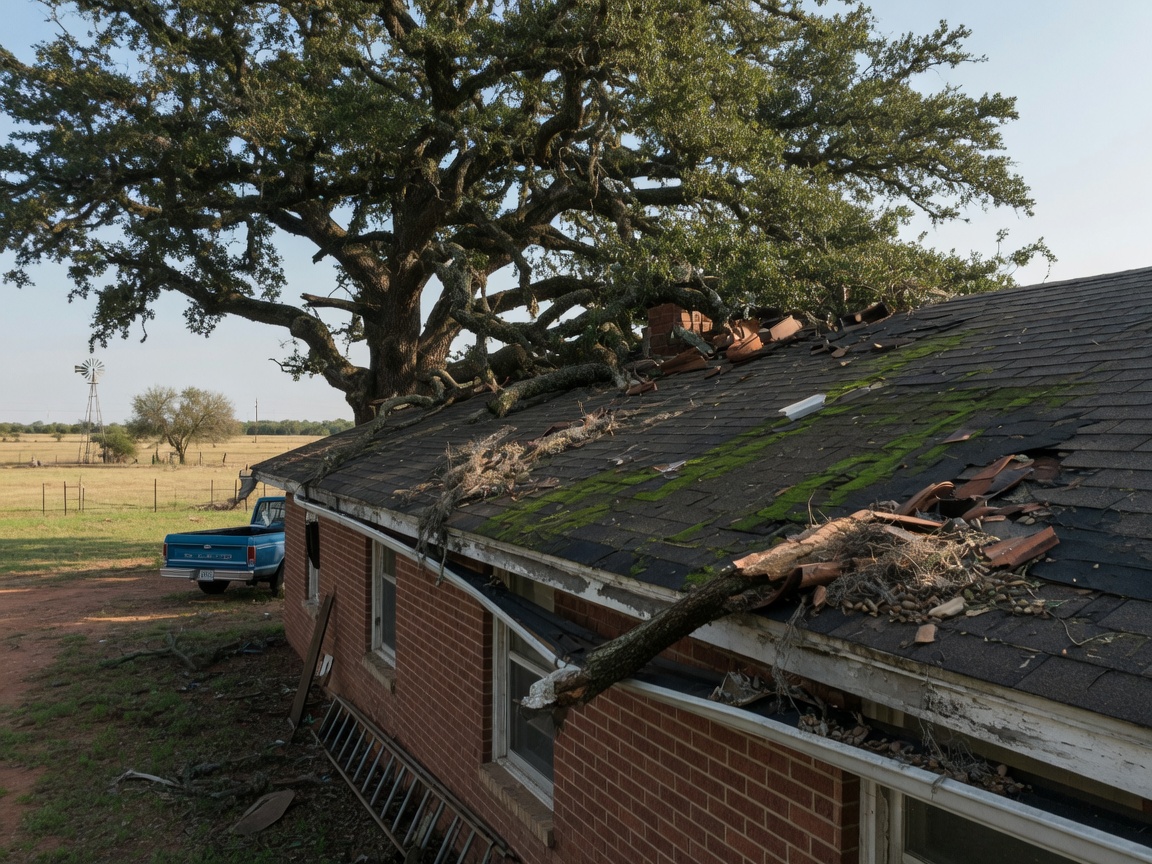
Tree overhang in rural Texas shortens roof life by 8–12 years on average through constant debris buildup, trapped moisture and branch abrasion that wears asphalt shingles faster than open exposure. Homes in Downtown Alvarado and surrounding Johnson County properties see this accelerated wear because mature oaks and pecans often sit within 10 feet of roof edges on older single-story houses.
Debris Accumulation and Moisture Retention
Leaves, twigs and pollen collect in gutters and along valleys when branches extend over the roof plane. In Alvarado’s hot summers this organic matter holds humidity against the shingles, promoting algae streaks and softening the granular surface so that wind-driven rain from occasional severe storms penetrates faster. Rural properties near the Johnson County Fairgrounds often have larger tree canopies than newer subdivisions in Burleson or Joshua, making seasonal gutter cleaning every 4–6 months a practical necessity rather than an optional task. When moisture stays trapped under the overhang, the felt underlayment can begin to rot within 5–7 years instead of the 15–20 years typical on unobstructed roofs.
Branch Contact and Physical Damage
Limbs rubbing against shingles during high winds create small tears that widen over time, especially on south-facing slopes that receive the strongest afternoon sun. In Cleburne and nearby Joshua, where gusts from spring storms routinely exceed 50 mph, these abrasions turn into entry points for water once the protective granules are gone. Homeowners can spot the problem by looking for missing granules in linear patterns directly beneath major branches or by checking whether shingle edges curl upward where contact occurs. Addressing the issue early prevents the need for full roof replacement that might otherwise be required after only 12–15 years instead of the 20–25 years expected in open terrain.
Storm Amplification in Johnson County
Severe thunderstorms common to the region deliver hail and high winds that turn overhanging limbs into battering rams. A single 2-inch branch can gouge multiple courses of shingles during one event, and the damage often goes unnoticed until leaks appear inside the attic. Properties along FM 2738 and in Grandview experience this pattern because older rural lots retain more mature trees than newer developments in Mansfield or Midlothian. Regular pruning that maintains at least 6–8 feet of clearance above the roof plane reduces both the frequency of storm damage roof repair calls and the volume of debris that must be removed after each weather system.
Practical Steps for Rural Homeowners
Start by walking the perimeter after leaf drop in late fall and again after spring storms to note any limbs within 10 feet of the roofline. Schedule professional trimming before summer heat arrives so crews can work safely without stressing the trees. Pair the trimming with a roof inspection that documents current shingle condition and any early moisture staining. When replacement becomes necessary, choosing impact-rated shingles designed for Texas weather helps offset the remaining risk from distant branches. These targeted actions keep roofs performing closer to their full expected lifespan even on tree-lined lots throughout Johnson County.